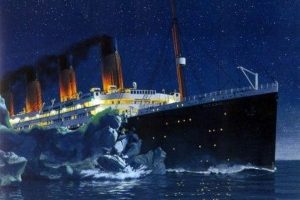
The presentation begins with the most famous maritime accident, the RMS Titanic, in 1912 the largest ship in the world, which sank on its maiden voyage with huge loss of life.
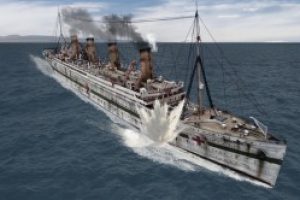
Four years later, her lesser known sister ship, the HMHS Britannic, serving as a hospital ship, also sank. She was the largest ship lost during World War One.
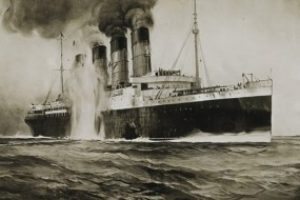
Another victim of “the war to end all wars” was the RMS Lusitania, which took her ill-fated last journey in 1915. She was sunk by Germany’s newest and, as of then still untried weapon, the U-boat.
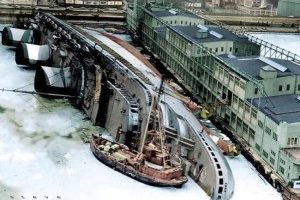
The 1930s saw the boom of ocean liner travel as the great liners reached their pinnacle of luxury, speed and service. In what became a source of great national pride, France built the most majestic and glamorous liner ever: SSNormandie. Unfortunately, World War II brought North Atlantic travel to an abrupt halt, and led to the sinking of the magnificent SS Normandie in Manhattan, New York City.
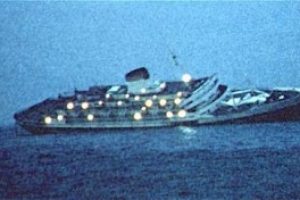
After the world recovered from World War II, ocean liners experienced one last period of glamorous ocean travel. Determined to recreate an earlier grandeur, the Italian Line launched a new flagship, SS Andrea Doria. For 3 years in the 1950’s she was the most notable ship sailing the southern route, to and from New York, through the Mediterranean. She sank after being rammed by the Swedish ship Stockholm, near Nantucket, in July 1956. Her sinking was the first time such a catastrophe was filmed by circling airplanes.
In his inimitable way, René Silvin, who was on one of Andrea Doria’s completed crossing, will bring these ships, which will forever hold our fascination and imagination, back to life.